What Brisbane 2032 can learn from Las Vegas and LA
Find me someone who hasn’t voiced their opinion around Brisbane 2032, and I’ll find you an Olympic ceremony that was predictable and finished on time.
The hype, the location, the impact to environment, the legacy…all debated, few resolved. But over the course of a day at QUT last week, the inaugural Sports Conference curated a cast of leaders with the collective experience to shape our 2032 journey. Along with two of the people who actually built multi-billion dollar stadiums Brisbane is trying to emulate.
Both Matt Pasco, Vice President of Technology for the Las Vegas Raiders and Allegiant Stadium, and Brenda Suh, Director of Business Technology at SoFi Stadium and Hollywood Park, have lived through the kind of, create from the ‘ground-up’ stadium build, that Queensland is staring down for 2032. They were kind enough to share what they wish they learned along the way and advice they wish they’d be given earlier.
Pasco’s message was simple: get the right people in the room early, or pay for it later. His Allegiant Stadium, a $1.9 billion, 65,000-seat venue in the Nevada desert, was built in 31 months. But it was the planning that saved the Raiders money, not the rapid build time.
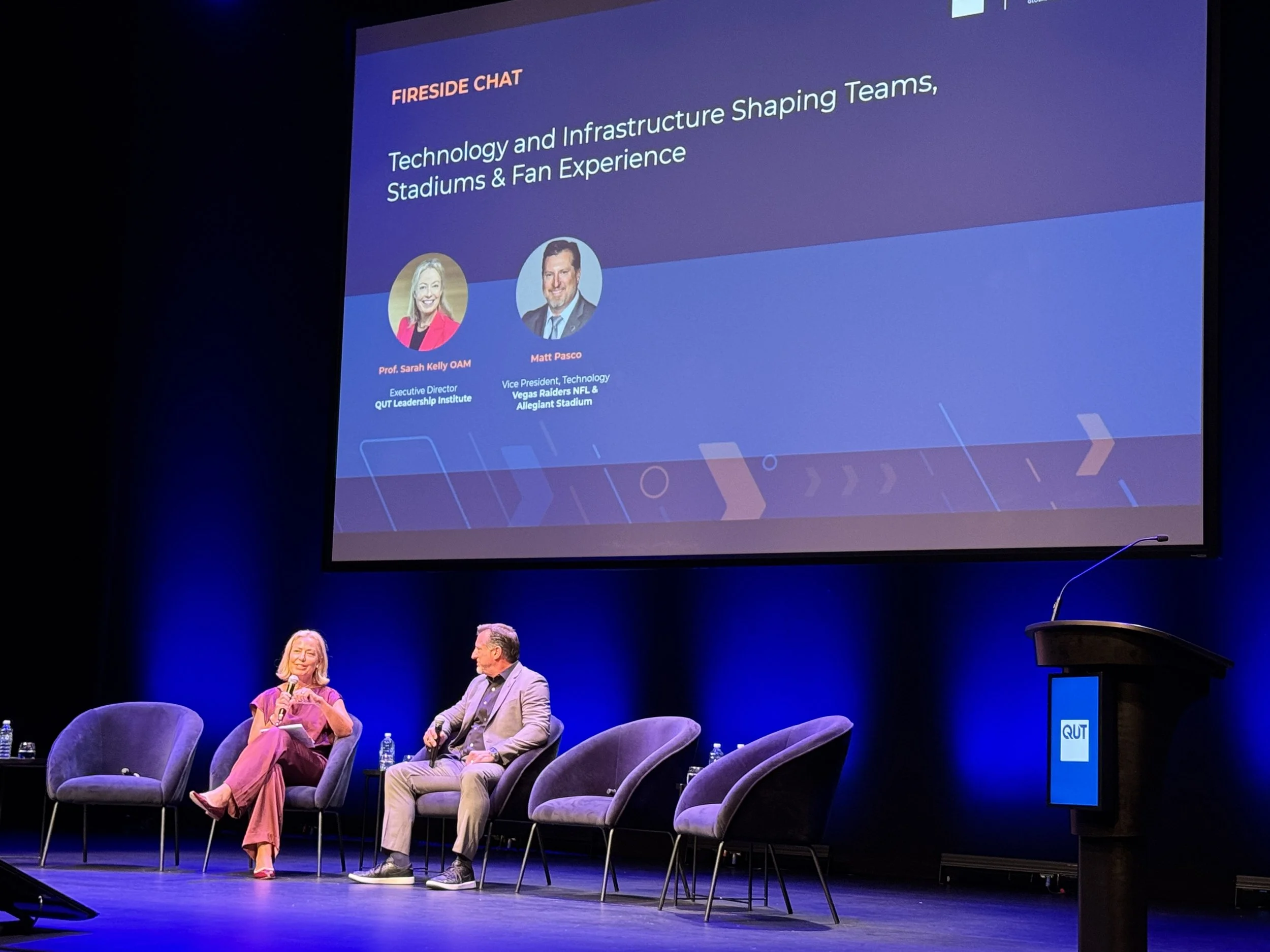
QUT’s Prof. Sarah Kelly OAM hosting a fireside chat with Matt Pascoe VP of Information Technology at Las Vegas Raiders and Allegiant Stadium
“Get your technology people in the door early in the design phase,” Pasco implored the Brisbane audience. “Sports is a very old business, construction is a very old business, and they tend to be set in their ways.” So kick down the meeting room door if you need to, just get in the room early.
Speaking with him after the event, he did praise the ability of QLD/Australia in general of being able to get the right people in the same room for decision-making.
One specific example of planning, Pasco insisted on pre-running conduit throughout the entire structure, before a drop of concrete was poured at Allegiant. Running fibre through set concrete later is expensive and disruptive. Doing it upfront costs a fraction. That forward planning meant the stadium could later host the Super Bowl, Country Music Awards, boxing and concerts – each with entirely different technology demands.
“Connectivity in the 2020s is like running water,” Pasco admits. “It needs to be everywhere. It’s just got to work.”
Hopefully this is written on a whiteboard somewhere in Brisbane.
Suh’s perspective came from managing a 300-acre mixed-use precinct at Hollywood Park, with its crown jewel SoFi Stadium, to host the opening ceremony and swimming events for the 2028 LA Olympics. Her advice? Invest in permanent, owner-provided technology wherever possible and get the various stakeholder groups aligned during design, not after. As she put it, “if you can get it right the first time, it’s a million times cheaper than going back”. Those lessons are now shaping how SoFi prepares for FIFA World Cup, the Super Bowl and the Olympics over the next two years.
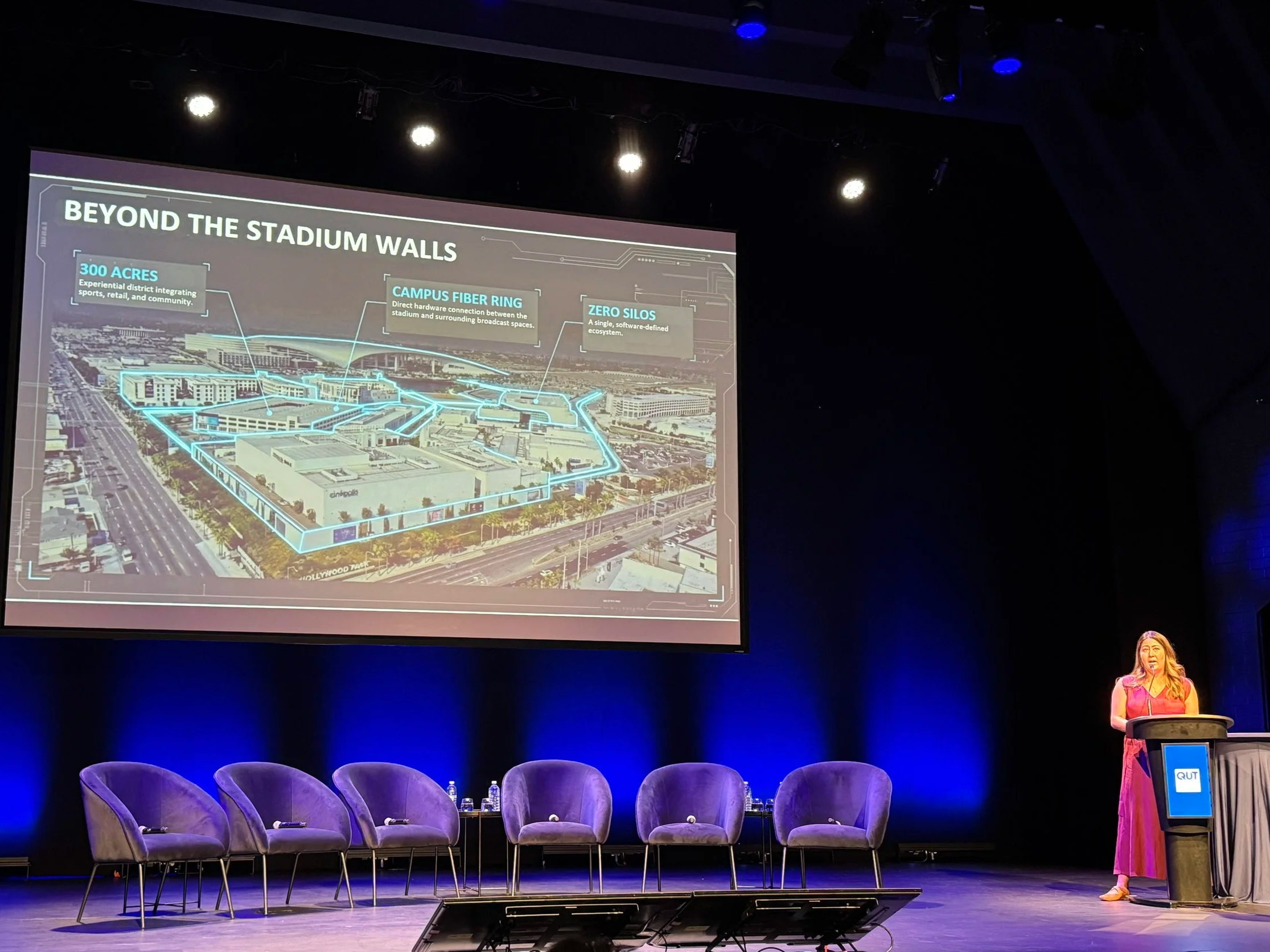
Brenda Suh, Director, Business Technology at SoFi Stadium & Hollywood Park giving her keynote - Designing for the next generation of sport
A lot of the advice on offer, for me wasn't only about technology. The underlying message was about communication. Getting construction, technology, sponsorship and operations in the same meetings early enough to make decisions together, rather than retrofitting compromises. At Allegiant, Pasco’s procurement and sponsorship teams met every Wednesday morning to align on products and partnerships. Premium services that also paid the bills. That doesn’t happen by accident. It happens because someone built a communication structure around it.
The hardware and infrastructure is one element, but the thing that differentiates a true pioneer is fan experience. As MIT’s Ben Shields summarised at the same conference: successful digital transformation in sport starts and ends with the fan’. ‘It needs to just work’, no matter the complexity on the backend. It should be seamless, with no friction at all. For him those stadiums with the best guest experience, ‘don’t lose the human touch’. Whether it’s reasonable prices for concessions, or streamlining purchases in-stadium using pre-pay electronic gates, with no cash registers.
During her keynote, Suh explained “Every fan is a player” outlining how the rules have changed for stadium engagement - kids now lead the parents around the ground using their devices. And engagement is at the top of her list every ‘game day’ where their 70,000 sq ft infinity screen is partitioned for crowd polls, replays and keeping the entertainment going, during breaks in play.
Aussie Grand Prix Corporation CEO, Travis Auld, revealed that while Wifi wasn’t part of his initial planning during his time on Gold Coast Suns’ stadium build, customer experience remained his top priority. If his ‘new’ team (read staff) was to compete against theme parks, beaches and the weather, they would need to be trained by the very best. It was between Seattle Fish Markets, and Disney according to his team, and the House of Mouse team felt more achievable. So he flew the team that trained Disney staff out to the coast. Even the security guards were included in the program — Mickey Mouse ears and all. It could have gone one of two ways he recalled, but fortunately they got on board.
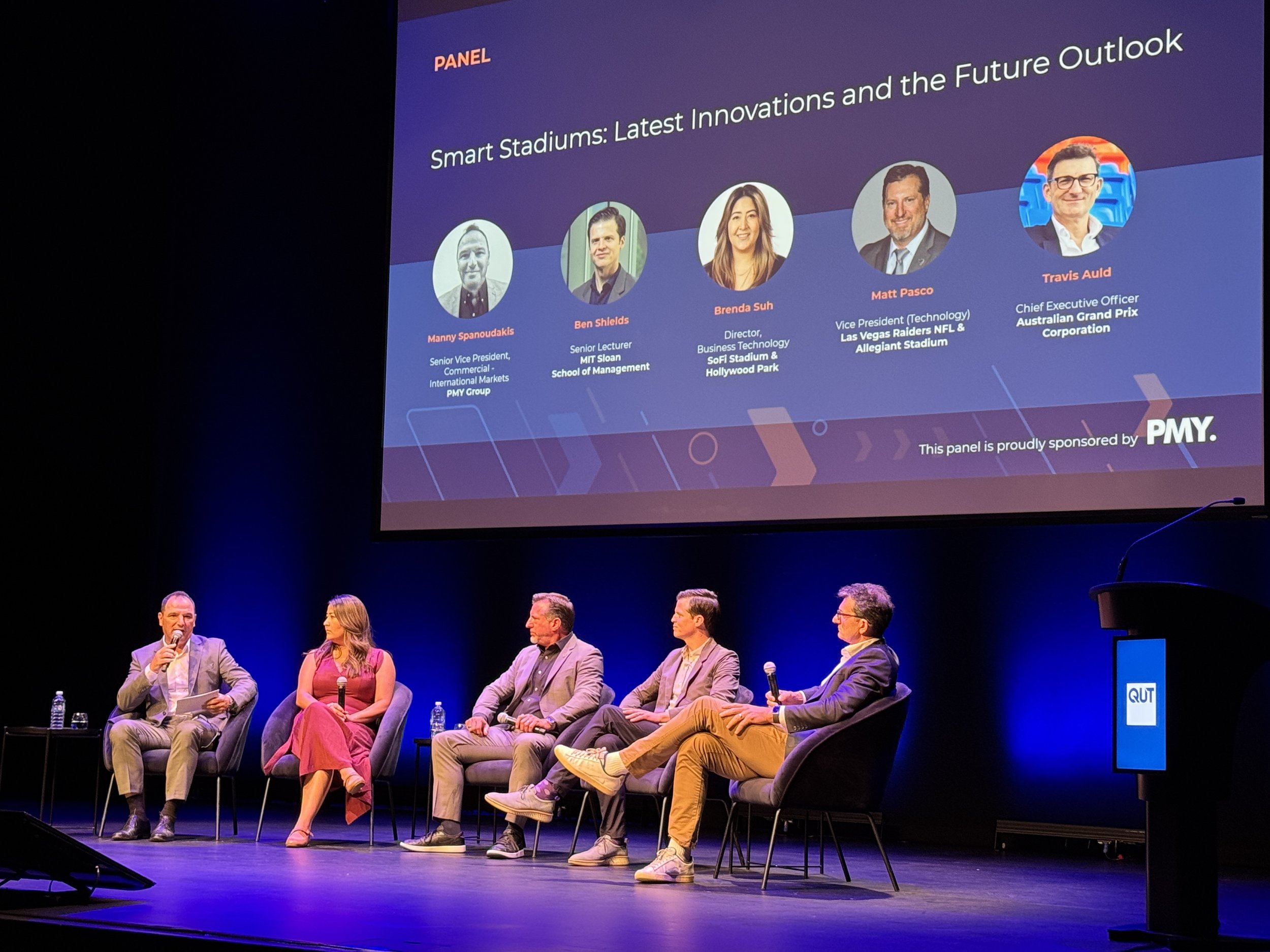
Future of Sport Conference Panel - Smart Stadiums: Latest Innovations and the Future Outlook
It’s this kind of thinking Brisbane 2032 needs. Not only smart engineering and fast Wifi, but a genuine obsession with the person who walks through the gate. Brisbane has an extraordinary opportunity. Pasco himself drew the parallel, “Las Vegas has gone from zero professional sports teams to five in just over a decade”, transformed by world-class venues. The new stadium here can do the same. It will require planners to treat communication and stakeholder alignment as highly as the concrete and steel.
Last week felt like our cheat sheet. Two stadiums, built from scratch, by people who flew to Brisbane to share what they learned. The question now is how many of those with a hard hat and budget are listening?