How to maximise your event sponsorship: A content and comms playbook
Commswork Founder, Liam Fitzpatrick, explains how to extend the reach of event sponsorship ROI beyond those in the room. Having developed the event sponsorship strategy for more than 50 major events, across four continents, Liam Fitzpatrick shares how to prepare, plan and execute for your next conference.
An edited version of this article was published on Retail Biz.
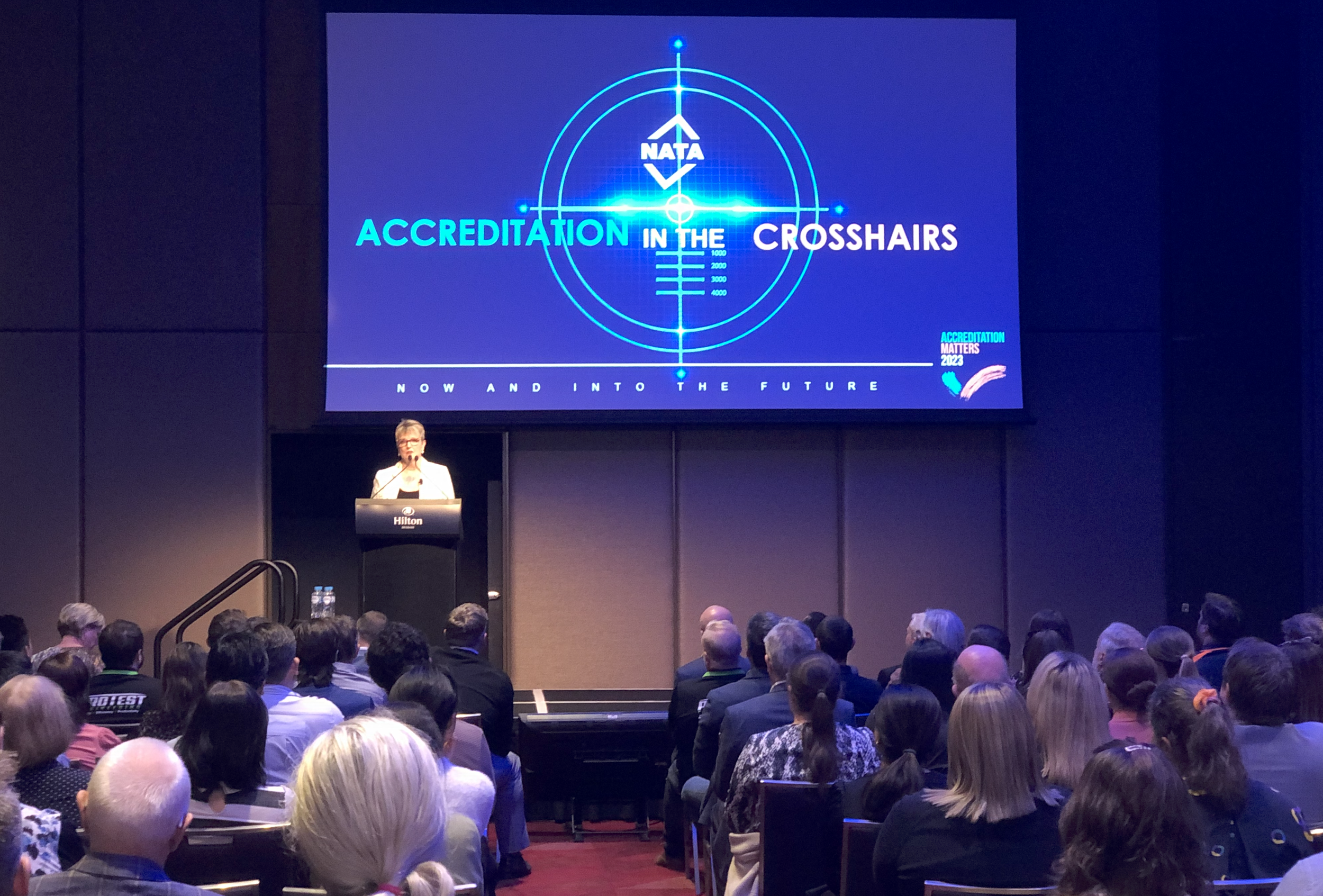
NATA CEO presenting at Accreditation Matters
Events are where the real shop talk happens. It's where B2B deals are made and the future of the industry can be hotly debated.
For humans prioritising engaging with other humans, it represents some of the highlights in the annual calendar. And for those sponsoring, it's a hero moment, when capturing hearts, minds and attention is an organisational must.
Contrary to the glut of AI headlines, not all your marketing activity needs to involve algorithms.
How to measure ROI of event sponsorship?
Dropping tens (or even hundreds) of thousands on event sponsorship offers a unique window to elevate your company with a valued brand and leverage that association. But for most of the executives I speak with, the profile alone doesn't always provide the ROI they had in mind.
This can happen when expectations are mismatched. Or when value KPIs around measurement were never confirmed ahead of signing. So before we get into the how, let's settle the what. What does success actually look like for your sponsorship? Booth visits. Qualified conversations. Media mentions. LinkedIn reach among your target audience. Pipeline influenced in the 90 days after the event. These are the levers worth measuring, and they need to be agreed internally before anyone signs anything.
The advice below is an accumulation of my experience working on StartCon, Accreditation Matters, London Tech Week, and with the organisers of Cannes Lions, Mumbrella360, RetailFest, Business of Sport Summit and SxSW. As well as working alongside teams that have got it right. And importantly, learnings from the mistakes we've made, including spending an embarrassing number of hours debating the placement of a logo in a deck, rather than the delivery of a keynote.
Inception of sponsorship
You'll have your own planning and budget meetings. But ensure internal and external comms teams are part of the discussions early, to align on how marketing spend on conference sponsorship can best deliver for your business objectives.
I've seen comms brought in a few weeks out to bolt on social support, despite the organisation being a premium tier sponsor with speaking options.
This is a missed opportunity.
Conference sponsorship value starts as soon as you announce your involvement. Do not wait until the event to start sharing with your LinkedIn network. Most provide social tiles these days, so there's no excuse. The bigger your team, the wider the network they can share it with. Advocacy begins with your people.
Have a spokesperson speaking? Start teasing the insights. Don't wait for the presentation to be finalised. Build excitement, especially if you're competing across other streams of speakers at the same time.
The asset that outlasts the event
Thirteen years ago, Ben, a former colleague, started a list. His original motivation was entirely self-serving: tracking every party and networking event at Cannes Lions for what I'll diplomatically call research purposes for us. But the list became something the industry actually waited for. People forwarded it. Strangers emailed asking to be added. It became the Highlander of lists…there could be only one, and it has become his/Propeller’s.
He created it for himself. It delivered for his personal brand for years.
The same logic applies to a genuinely useful content asset built around your sponsorship. A '2026 Omni-channel Retail Playbook' for RetailFest as an example.
A maturity framework for whatever category your business operates in. A concise, well-produced guide that answers the question your target audience is already asking. Something with a title decision-makers would forward to their team on a Monday morning.The value compounds in ways a branded stress ball never will.
The executive who took your playbook back to their desk becomes a distribution channel. The CFO who couldn't attend gets it forwarded by their CMO, encountering your thinking with an implicit endorsement already attached. The event platform confers authority. The content delivers the message.
Reference the asset during your talk, drawing from it rather than recapping your slides. Distribute it at the booth. Use it in every follow-up. Done consistently, this kind of asset can become your organisation's signature, the thing people expect from you at your sector’s biggest gatherings. One white paper we worked one, within a very niche area, attracted more than 700 downloads.
What makes a good conference merchandise item?
I still have socks from an event 10 years ago. Which says more about my clothes shopping habits than the quality of their merch. But to me, it was useful. Living in thongs (and the Northern Rivers) means I don't have a high turnover of foot warmers.
That's the only test that matters. Ask would you put this item in my own bag if your brand wasn't plastered across the front of it?
The best merchandise earns its place in someone's luggage. It connects, even loosely, to what your business actually does. It gets used in a context that keeps your name visible long after the lanyards have been recycled. If it's a multi-day event, clothing is something people will wear on subsequent days. Great branding, for those who earn it.
Bonus points if the item reflects something about the audience you're trying to reach. A USB hub for a tech crowd. A decent notebook for a strategy conference. Something that signals you paid attention to who was in the room.
The planning nobody does early enough
Sustainability matters to society and your customers.
The ICC in Sydney started donating left over items to community groups, with one conference producing four tonnes of waste according to UFI. So please avoid contributing to the hundreds of thousands tonnes of waste globally every year.
The industry is starting to reckon with what all that branded tat actually costs. Your customers are watching how you behave at events, as well as what you say on stage.
Speaking with one agency sourcing merchandise for a brand with serious global sustainability commitments, the planning and lead time required for ensuring items would be reusable, responsibly sourced and aligned with their values was significant. Worth factoring in well ahead of the event. Months, not weeks before.
Which is the point. If merchandise decisions are being made in the fortnight before the event, you're choosing from whatever will make it by your deadline.
The options that reflect well on your brand, without ending up in landfill, require planning that most teams simply don't build into the sponsorship timeline.
Start this conversation the same week you sign the contract. Or prepare to waste your opportunity and budget.
What does a good event sponsorship content strategy include?
Most sponsorship strategies start the week before the event and finish the day after. In two decades of working with multinationals, NGOs, and independent agencies across three continents, my experience is consistent. The ones that deliver the best return on sponsorship start the moment you announce your involvement and run for six weeks beyond the closing gala.
In practice that means five phases. Getting your announcement and early content into the market before anyone else has stopped noticing. Briefing your ground team on who owns what before a single flight is booked. Capturing content while you're there, in real time, not reconstructed from memory on the Thursday after. Following up within 24 hours while faces and conversations are still fresh. And then, once the noise has died down and everyone else has stopped posting, putting something considered back into the market that reignites your association with the event.
Each phase builds on the last. Skip one and the return on the others shrinks.
Event marketing timeline
Once announced:
Connect with all of the other speakers. Not at the event. As soon as the agenda is live. They'll likely have complementary networks who can share your content in the lead-up.
Set up key meetings for senior leaders with key stakeholders. This will include media, if any are in attendance (revisit two weeks before the event).
For those with speaking opportunities, think about how to deliver a talk that doesn't feel like you paid to be part of the programme. How will you be remembered against other keynotes? What value do you provide to the industry, and how should organisations plan for shifting trends within your market? If you're there to sell, your message will be left in the recycle bin along with the agenda.
Start planning early. I've been on presentation deck calls that have lasted in excess of five hours, days before an event, arguing over where logos should be placed. Don't get lost in the minutiae. What message would you like to land? What storytelling tools can help it be retained by those attending? Then focus on delivery and execution.
Eight weeks out:
Continue spruiking your session if there's one you're involved with.
Join WhatsApp groups and connect with fellow attendees ahead of time.
Plan for off-programme events. What lunches can you attend? Workshop breakfasts? Are there early morning walking or running groups to join? Your body will thank you if you've travelled interstate or nationally.
Four weeks out:
If you're a speaker, share a little more of the insights you'll be delivering on stage. Your abstract will already be on the agenda, so try an anecdote you'll use in the speech. The aim is to get people excited about seeing your talk. Often you're competing with other streams or activations. You may have even been assigned the unenviable last session on the last day. So sell the inspiration guests will leave with.
And the audience for this content isn't only those attending. It's to raise your executive profile with your wider network. The people who didn't book a ticket are often the more valuable audience, particularly prospects who couldn't justify the cost, journalists covering the event from afar, or international stakeholders who follow your space but weren't in the room. Create for them too. That's the audience most sponsoring teams forget to brief for.
Who does what: The ground team briefing
This is where plans can fall apart. It’s not for want of a good strategy, but the lack in clarity around who is responsible for what, once the event is actually underway.
Before anyone boards a flight, produce a one-page briefing document. Who handles inbound media queries. Who manages the booth at each session. Who shadows the speaker for pre and post-event photography. Who is the designated content creator on the ground. Without this, the good intentions you spent weeks building evaporate in the first two hours, when everyone is networking and no one has picked up the camera.
Designate your roles early. They don't need to be elaborate. Just agreed, so everyone is clear and focused and responsibilities can be shared among the team, and skillset available.
Two weeks out:
Times, days, booth numbers. Now's the time to get serious and detailed about sharing your presence at the event. Do you have or need a pre-booking system for the booth, or for key spokespeople with prospects, clients and stakeholders during the event? Get the grunt work done now.
Are you releasing a product or news during the event? Time to have the comms team curate a list of all media in attendance.
Any speeches need to be finalised. Deck design signed off and sent to organisers.
Also clarify now how you'll be capturing leads on the ground. Badge scanning. A QR code to a landing page. A compelling enough reason for someone to hand over their details. Whatever the mechanism, it needs to be decided and tested before you arrive, not improvised at the booth on the morning of day one.
One week out:
Pitch any news release to land the day before or the day of the event itself. If your news is significant, aim for the day before. Best avoid if a minister is opening proceedings.
Designate your FOMO Editor at Large. Their role is to make people feel guilty for not having attended or booked a ticket earlier. Do the conference organisers' job for them, and your high engagement will be valued by both their team and yours.
Event eve:
Capture photos of the team setting up the booth. Post on LinkedIn. Talk about who's coming tomorrow, the excitement, the mood of other vendors. Photographs together with organisers in front of a media wall, if you can. At the very least the whole on-ground team should be present. Aim to have all of these content pieces taken early, before time pressures affect everyone's minds, moods and location.
Comms should prioritise getting group shots of key spokespeople with those providing keynotes, organisers and ministers. If there are roundtables, make sure to capture people before the food gets in the way.
Ever noticed how quickly time goes when networking with good people? The difficulty with all these tasks increases as the hours pass. Front-load everything you can.
Event days:
More pictures.
"Excited to kick off Day 1. Amazing conversations from {insert big name/prospect} last night. Expecting knockout insights from {Your speaker/client/inspiration} today. We're located at Booth {insert number} where we'll be offering free {merch/advice/margaritas} all day."
For those with speaking responsibilities, check with the tech team at your presentation stage that any large files, videos or links are working. Most conference venues handle this well now, but if jumping into the theatre during a break to check your slides is available, take that chance. Executives: delegate this task to your boldest team member.
Your on-site team should have five to ten posts pre-written, signed off with spokespeople, ready to go. Not scheduled, because things can change. Speakers drop out. Events get cancelled. Having them ready allows timely posting of your senior executive on stage, juxtaposed with a shot of a crowded room, at whatever angle makes that happen.
Photographers: you have a job, so ignore the anxiety of causing a few seconds of inconvenience to guests, provided you're not interfering with the stage. This will be appreciated by the team members not at the event, along with the presenting executive two or three weeks later when LinkedIn reminds them of your work.
Photo roll call: team at event, obligatory media wall, networking drinks, key client partners.
The day after:
Most teams write this off as a recovery day.
It shouldn't be. It's can be the highest-value 24 hours in the entire cycle.
Can the on the ground team film a video of the experience.
Faces are still fresh. Conversations are still warm. Send personal follow-up emails while you can still recall the specifics of what was said. Send LinkedIn connection requests with a genuine note referencing what you actually spoke about. Run a brief internal debrief with the on-ground team while the observations are clear enough to be useful, not reconstructed from half-remembered anecdotes a week later.
The leads you captured at the booth lose value every hour you don't act on them. If this sounds like a police investigation, then, clearly I’ve been watching too much Deadloch. But don’t give people interested in your people/business a chance to get distracted by their own jobs.
Post-event content strategy:
Did you plan to have a videographer/team member with an iPhone who can pull together a visual representation of your brand’s presence. Get this posted within a week, so it doesn’t lose topicality in the minds of your network.
Conference by the numbers. Have a post or blog ready to go: how many attended, how many came to your booth, the ‘unprecedented’ level of interest in your product, and one or two anecdotes that prove it wasn't all written before the event (or by an algorithm that wasn't in the room).
Pitch for opinion-editorials on learnings from the event.
Blogs on content beyond just your speech. What were the senior leaders of your industry debating at the drinks? What challenges kept coming up? What's the one shift in thinking you hadn't anticipated walking in?
Six weeks out from the event:
Once noise has settled. Everyone else has stopped posting.
This is when a reflective LinkedIn post, or a short op-ed placed in a trade title, tends to outperform event-day content. The insight is still relevant. The competition for attention is gone. And "I've been sitting with this since {event name}” is a credible framing tool, for execs who like to ruminate and give their ideas valued consideration before posting knee-jerk reactions etc. Or those that have been playing catch up following time out of the office. Either way, it’s a chance to reignite association with the event attendees/organisers/keynote speakers etc.
It's also when editorial desks can potentially still consider trend-based pitches. The news hook of what was said, by whom has passed. Yet the opinion impacting the industry remains ever-present etc.
Before you sign the next one
Events are an under-utilised marketing channel. Tapping into the positive emotions that come with them, where teams celebrate and actively connect with industry peers, leads to people being more open and agreeable than when your message arrives as item 14 on a to-do list.
They remain a hotbed for genuinely compelling content. But only if you treat them that way.
A plan for preparing ahead of time, capturing content while you're there, following up within 48 hours, and maximising your involvement in the weeks after will help your sponsorship dollars reach well beyond the logo on a pull-up banner or a cursory reference at the networking drinks.
Event amplification and comms can supercharge your business results at any stage of the journey. But only if your team and partners are aligned on objectives and outcomes before a contract has been signed. In my two decades working with multinationals through to indie agencies across four continents, it works best when comms has a seat at the budget meeting, not a briefing call three weeks before the event.
That's where the return on your investment is decided.
Liam Fitzpatrick is the founder of Commswork. He has spent two decades working on communications strategy across four continents, including with the teams behind Cannes Lions, Mumbrella360, SxSW and RetailFest. Commswork works with founders and senior executives on media strategy, executive profiling and crisis communications